calling the directory…
netmeeting ils
pinging…
However, all this suggests that teaching idiomatic English to a foreigner or >a small child is less obvious than one might think. It's simpler in French: >"Quinze minutes avant dix heures" works just fine.
In article <1795342425-12588@newsgrouper.org>,
athel.cb@gmail.com <user12588@newsgrouper.org.invalid> wrote:
However, all this suggests that teaching idiomatic English to a foreigner or >a small child is less obvious than one might think. It's simpler in French: >"Quinze minutes avant dix heures" works just fine.
It would definitely sound odd to my ears. I would never say anything but "dix heures moins le quart" or "neuf heures quarante cinq", depending on
the context.
On 11/22/2026 7:14 PM, athel.cb@gmail.com wrote:
Bertel Lund Hansen <rundtosset@lundhansen.dk> posted:
Den 22.11.2026 kl. 11.13 skrev athel.cb@gmail.com:Some people say "half nine" to mean half past nine, but I don't. Others, I >> think, but I'm not sure if I've heard it, use the same to mean half past
For 30, we say half past nine, but NOT half to ten;
There's a formula for "half past nine" (and similar) that can be
misunderstood, but I have forgotten what it is.
eight (i.e. 30 minutes to nine). There's your ambiguity.
Then you have /false friends/. In Icelandic, "half nine" would mean
it's 8:30. It's half towards the hour you mention.
If I'm not mistaken, English also has implied time, such as "ten minutes
to" when the hour is understood, "quarter past" and so forth. But these
are getting rarer and rarer as we don't need to ask what the time is
anymore, and just look at our phones.
I guess, for ESL, writing a whole chapter on the topic of time is fine.
For one thing, I don't know anyone who'd use the term /vespers/ [1] but
at minimum, it's useful to know it can mean time; such as /after ves-
pers/.
And if you're ever reading texts from earlier than the 12th century,
it can be useful to know /noon/ meant something like 3pm, and not mid-
day [2].
If anyone in alt.usage.english feels inclined to write such a book, I
might buy it.
Best wishes, and happy English!
[1] I got it wrong, I thought it was morning before I looked it up.
[2] One of these details vampires in movies never seem to have any
trouble with. I'm thinking of /Queen of the Damned/ (2002) or the book (1988), though not a particular scene; just the age of the vampire.
Le 22/11/2026 à 10:13, athel.cb@gmail.com a écrit :
Yesterday, talking to my monoglot (for the moment) francophone granddaughter,
I realized that there are five different systems for reporting the time in >> ordinary everyday language, accordiung to the number of minutes after the hour:
For 0, we say nine o'clock;
For 5, 10, 20 or 25, we say 25 past nine or 25 to ten;
For 15, we say quarter past nine or quarter to ten;
For 30, we say half past nine, but NOT half to ten;
For other numbers we add the word "minutes", 23 minutes past nine.
If you say the wrong one you will not be laughed out of court and you'll be >> understood. In some cases it won't even sound particularly odd: if you say >> "25 minutes to ten" it will probably pass unnoticed.
And then there are regional variations - it wants ten minutes to the
hour, I'll meet you back [a bit after] of six, etc. (in Scots).
On Sun, 22 Nov 2026 10:55:36 +0000, Hibou <vpaereru-unmonitored@yahoo.com.invalid> wrote:
Le 22/11/2026 à 10:13, athel.cb@gmail.com a écrit :
Yesterday, talking to my monoglot (for the moment) francophone granddaughter,
I realized that there are five different systems for reporting the time in >>> ordinary everyday language, accordiung to the number of minutes after the hour:
For 0, we say nine o'clock;
For 5, 10, 20 or 25, we say 25 past nine or 25 to ten;
For 15, we say quarter past nine or quarter to ten;
For 30, we say half past nine, but NOT half to ten;
For other numbers we add the word "minutes", 23 minutes past nine.
If you say the wrong one you will not be laughed out of court and you'll be >>> understood. In some cases it won't even sound particularly odd: if you say >>> "25 minutes to ten" it will probably pass unnoticed.
And then there are regional variations - it wants ten minutes to the
hour, I'll meet you back [a bit after] of six, etc. (in Scots).
In some places "half six" means 5:30, while in others it means 6:30.
Hibou wrote:
And then there are regional variations - it wants ten minutes to the
hour, I'll meet you back [a bit after] of six, etc. (in Scots).
In some places "half six" means 5:30, while in others it means 6:30.
Yesterday, talking to my monoglot (for the moment) francophone
granddaughter, I realized that there are five different systems
for reporting the time in ordinary everyday language, accordiung
to the number of minutes after the hour:
For 0, we say nine o'clock;
For 5, 10, 20 or 25, we say 25 past nine or 25 to ten;
For 15, we say quarter past nine or quarter to ten;
For 30, we say half past nine, but NOT half to ten;
For other numbers we add the word "minutes", 23 minutes past nine.
If you say the wrong one you will not be laughed out of court and
you'll be understood. In some cases it won't even sound
particularly odd: if you say "25 minutes to ten" it will probably
pass unnoticed.
However, all this suggests that teaching idiomatic English to a--
foreigner or a small child is less obvious than one might think.
It's simpler in French: "Quinze minutes avant dix heures" works
just fine.
On 22 Nov 2026, athel.cb@gmail.com wroteleave?"
Yesterday, talking to my monoglot (for the moment) francophone
granddaughter, I realized that there are five different systems
for reporting the time in ordinary everyday language, accordiung
to the number of minutes after the hour:
For 0, we say nine o'clock;
For 5, 10, 20 or 25, we say 25 past nine or 25 to ten;
For 15, we say quarter past nine or quarter to ten;
For 30, we say half past nine, but NOT half to ten;
For other numbers we add the word "minutes", 23 minutes past nine.
If you say the wrong one you will not be laughed out of court and
you'll be understood. In some cases it won't even sound
particularly odd: if you say "25 minutes to ten" it will probably
pass unnoticed.
Depending on context, I'd say "Nine thirty-five" would be
unremarkable when answering "When time does your flight/train
Depending on context, I'd say "Nine thirty-five" would be
unremarkable when answering "When time does your flight/train leave?"
When ordering a taxi, I aim to give the time twice, in two different
ways, e.g. "Nine forty-five" and "Quarter to ten", to be sure the
dispatcher has it right.
Den 23.11.2026 kl. 15.35 skrev Hibou:
When ordering a taxi, I aim to give the time twice, in two different
ways, e.g. "Nine forty-five" and "Quarter to ten", to be sure the
dispatcher has it right.
Which one do you want?
Yesterday, talking to my monoglot (for the moment) francophone
granddaughter, I realized that there are five different systems for
reporting the time in ordinary everyday language, accordiung to the
number of minutes after the hour:
For 0, we say nine o'clock;
For 5, 10, 20 or 25, we say 25 past nine or 25 to ten;
For 15, we say quarter past nine or quarter to ten;
For 30, we say half past nine, but NOT half to ten;
For other numbers we add the word "minutes", 23 minutes past nine.
Referering to noon as 12:00 PM has always annoyed me. Noon is ON/AT
the meridian, not post. Any argument I've heard for that locution
sounds like an angular version of fencepost error.
Then you have /false friends/. In Icelandic, "half nine" would mean
it's 8:30. It's half towards the hour you mention.
[1] I got it wrong, I thought it was morning before I looked it up.
* Johann 'Myrkraverk' Oskarsson <ztEMS.1852$6Ni4.1591@fx17.ams4> :
Wrote on Mon, 23 Nov 2026 00:10:05 +0800:
Then you have /false friends/. In Icelandic, "half nine" would mean
it's 8:30. It's half towards the hour you mention.
[1] I got it wrong, I thought it was morning before I looked it up.
You might like to read Umberto Eco, /The Name of the Rose/, which might
train you on this.
(a genre of murder-mysteries that are set in medieval monastic contexts, (14th century in this case) but really reflecting late 20th economic-liberalization ideals. apparently also made into a movie,
there's a clip from it on redtube)
On 23/11/26 13:33, Steve Hayes wrote:
On Sun, 22 Nov 2026 10:55:36 +0000, Hibou
<vpaereru-unmonitored@yahoo.com.invalid> wrote:
Le 22/11/2026 à 10:13, athel.cb@gmail.com a écrit :
Yesterday, talking to my monoglot (for the moment) francophone granddaughter,
I realized that there are five different systems for reporting the time in >>>> ordinary everyday language, accordiung to the number of minutes after the hour:
For 0, we say nine o'clock;
For 5, 10, 20 or 25, we say 25 past nine or 25 to ten;
For 15, we say quarter past nine or quarter to ten;
For 30, we say half past nine, but NOT half to ten;
For other numbers we add the word "minutes", 23 minutes past nine.
If you say the wrong one you will not be laughed out of court and you'll be
understood. In some cases it won't even sound particularly odd: if you say >>>> "25 minutes to ten" it will probably pass unnoticed.
And then there are regional variations - it wants ten minutes to the
hour, I'll meet you back [a bit after] of six, etc. (in Scots).
In some places "half six" means 5:30, while in others it means 6:30.
And to quibblers like me it means 3.
(a genre of murder-mysteries that are set in medieval monastic contexts,
(14th century in this case) but really reflecting late 20th
economic-liberalization ideals. apparently also made into a movie,
there's a clip from it on redtube)
My review: that book was pretty good,
On 24/11/26 14:55, Madhu wrote:
* Johann 'Myrkraverk' Oskarsson <ztEMS.1852$6Ni4.1591@fx17.ams4> :
Wrote on Mon, 23 Nov 2026 00:10:05 +0800:
Then you have /false friends/. In Icelandic, "half nine" would mean
it's 8:30. It's half towards the hour you mention.
[1] I got it wrong, I thought it was morning before I looked it up.
You might like to read Umberto Eco, /The Name of the Rose/, which might train you on this.
(a genre of murder-mysteries that are set in medieval monastic contexts, (14th century in this case) but really reflecting late 20th economic-liberalization ideals. apparently also made into a movie,
there's a clip from it on redtube)
My review: that book was pretty good, and I still have it. But his
second book was boring.
On Sunday or thereabouts, Johann 'Myrkraverk' Oskarsson asked ...
On 11/22/2026 7:14 PM, athel.cb@gmail.com wrote:
Bertel Lund Hansen <rundtosset@lundhansen.dk> posted:
Den 22.11.2026 kl. 11.13 skrev athel.cb@gmail.com:Some people say "half nine" to mean half past nine, but I don't. Others, I >> think, but I'm not sure if I've heard it, use the same to mean half past >> eight (i.e. 30 minutes to nine). There's your ambiguity.
For 30, we say half past nine, but NOT half to ten;
There's a formula for "half past nine" (and similar) that can be
misunderstood, but I have forgotten what it is.
Then you have /false friends/. In Icelandic, "half nine" would mean
it's 8:30. It's half towards the hour you mention.
If I'm not mistaken, English also has implied time, such as "ten minutes to" when the hour is understood, "quarter past" and so forth. But these are getting rarer and rarer as we don't need to ask what the time is anymore, and just look at our phones.
I guess, for ESL, writing a whole chapter on the topic of time is fine.
For one thing, I don't know anyone who'd use the term /vespers/ [1] but
at minimum, it's useful to know it can mean time; such as /after ves- pers/.
And if you're ever reading texts from earlier than the 12th century,
it can be useful to know /noon/ meant something like 3pm, and not mid-
day [2].
Ninth hour of the day, with dawn at 0, no?
* Johann 'Myrkraverk' Oskarsson <ztEMS.1852$6Ni4.1591@fx17.ams4> :
Wrote on Mon, 23 Nov 2026 00:10:05 +0800:
Then you have /false friends/. In Icelandic, "half nine" would mean
it's 8:30. It's half towards the hour you mention.
[1] I got it wrong, I thought it was morning before I looked it up.
You might like to read Umberto Eco, /The Name of the Rose/, which might
train you on this.
(a genre of murder-mysteries that are set in medieval monastic contexts, (14th century in this case) but really reflecting late 20th economic-liberalization ideals. apparently also made into a movie,
there's a clip from it on redtube)
On 24/11/26 09:55, Mike Spencer wrote:
Referering to noon as 12:00 PM has always annoyed me. Noon is ON/AT
the meridian, not post. Any argument I've heard for that locution
sounds like an angular version of fencepost error.
The people who do bus and train timetables have learnt how to handle
that. If the bus is due at noon or midnight, the timetable will say 11:59.
Exception: some timetabling people are smart enough to use a 24-hour clock.
On 11/24/2026 8:48 AM, Peter Moylan wrote:
On 24/11/26 09:55, Mike Spencer wrote:
Referering to noon as 12:00 PM has always annoyed me. Noon is
ON/AT the meridian, not post. Any argument I've heard for that
locution sounds like an angular version of fencepost error.
The people who do bus and train timetables have learnt how to
handle that. If the bus is due at noon or midnight, the timetable
will say 11:59.
Exception: some timetabling people are smart enough to use a
24-hour clock.
People still get the date wrong for flights scheduled 12:05am.
Granted, probably only in a given lifetime, but this is still an
error people need to learn from; the airlines give no warning.
On 25/11/26 06:12, Johann 'Myrkraverk' Oskarsson wrote:
On 11/24/2026 8:48 AM, Peter Moylan wrote:
On 24/11/26 09:55, Mike Spencer wrote:
Referering to noon as 12:00 PM has always annoyed me. Noon is
ON/AT the meridian, not post. Any argument I've heard for that
locution sounds like an angular version of fencepost error.
The people who do bus and train timetables have learnt how to
handle that. If the bus is due at noon or midnight, the timetable
will say 11:59.
Exception: some timetabling people are smart enough to use a
24-hour clock.
People still get the date wrong for flights scheduled 12:05am.
Granted, probably only in a given lifetime, but this is still an
error people need to learn from; the airlines give no warning.
Well, flights are a different matter. Airlines switched to 24-hour
clocks years ago. I don't think I've ever seen am or pm on an airport departure board.
Connair used to be an airline operating in central Australia. (I knew
the son of the owner, shortly before he was killed by a suicidal pilot.)
Once the control tower at Darwin airport got a call from a pilot asking
for a time check.
"If that's Qantas, the time is 14:15. If it's Ansett, it's 2:15 pm. And
if it's Connair, the big hand is on the three ...."
On 25/11/26 06:12, Johann 'Myrkraverk' Oskarsson wrote:
On 11/24/2026 8:48 AM, Peter Moylan wrote:
On 24/11/26 09:55, Mike Spencer wrote:
Referering to noon as 12:00 PM has always annoyed me. Noon is
ON/AT the meridian, not post. Any argument I've heard for that
locution sounds like an angular version of fencepost error.
The people who do bus and train timetables have learnt how to
handle that. If the bus is due at noon or midnight, the timetable
will say 11:59.
Exception: some timetabling people are smart enough to use a
24-hour clock.
People still get the date wrong for flights scheduled 12:05am.
Granted, probably only in a given lifetime, but this is still an
error people need to learn from; the airlines give no warning.
Well, flights are a different matter. Airlines switched to 24-hour
clocks years ago. I don't think I've ever seen am or pm on an airport >departure board.
People still get the date wrong for flights scheduled 12:05am. Granted, >probably only in a given lifetime, but this is still an error people
need to learn from; the airlines give no warning.
On Wed, 25 Nov 2026 03:12:03 +0800, Johann 'Myrkraverk' Oskarsson <johann@myrkraverk.invalid> wrote:
People still get the date wrong for flights scheduled 12:05am. Granted,
probably only in a given lifetime, but this is still an error people
need to learn from; the airlines give no warning.
Even airlines get it wrong.
I was booked on flight KL317 that left Amsterdam for Rome at 17:10 on
18 July for Rome and was diverted via Zagreb but arrived in Rome at
22:15 on 18 July, in time for me to catch the next leg which was
flight BA121 which left Rome at 00:45 on 19 July for Johannesburg.
But it had left London on 18 July and arrived in Rome on 18 July, and
they had booked me on the flight that left Rome on 18 July, 24 hours
before. Fortunately the plane wasn't fully booked, so they found me a
seat.
On Wed, 25 Nov 2026 10:37:13 +1100, Peter Moylan <peter@pmoylan.org>
wrote:
On 25/11/26 06:12, Johann 'Myrkraverk' Oskarsson wrote:
On 11/24/2026 8:48 AM, Peter Moylan wrote:
On 24/11/26 09:55, Mike Spencer wrote:
Referering to noon as 12:00 PM has always annoyed me. Noon is
ON/AT the meridian, not post. Any argument I've heard for that
locution sounds like an angular version of fencepost error.
The people who do bus and train timetables have learnt how to
handle that. If the bus is due at noon or midnight, the timetable
will say 11:59.
Exception: some timetabling people are smart enough to use a
24-hour clock.
People still get the date wrong for flights scheduled 12:05am.
Granted, probably only in a given lifetime, but this is still an
error people need to learn from; the airlines give no warning.
Well, flights are a different matter. Airlines switched to 24-hour
clocks years ago. I don't think I've ever seen am or pm on an airport
departure board.
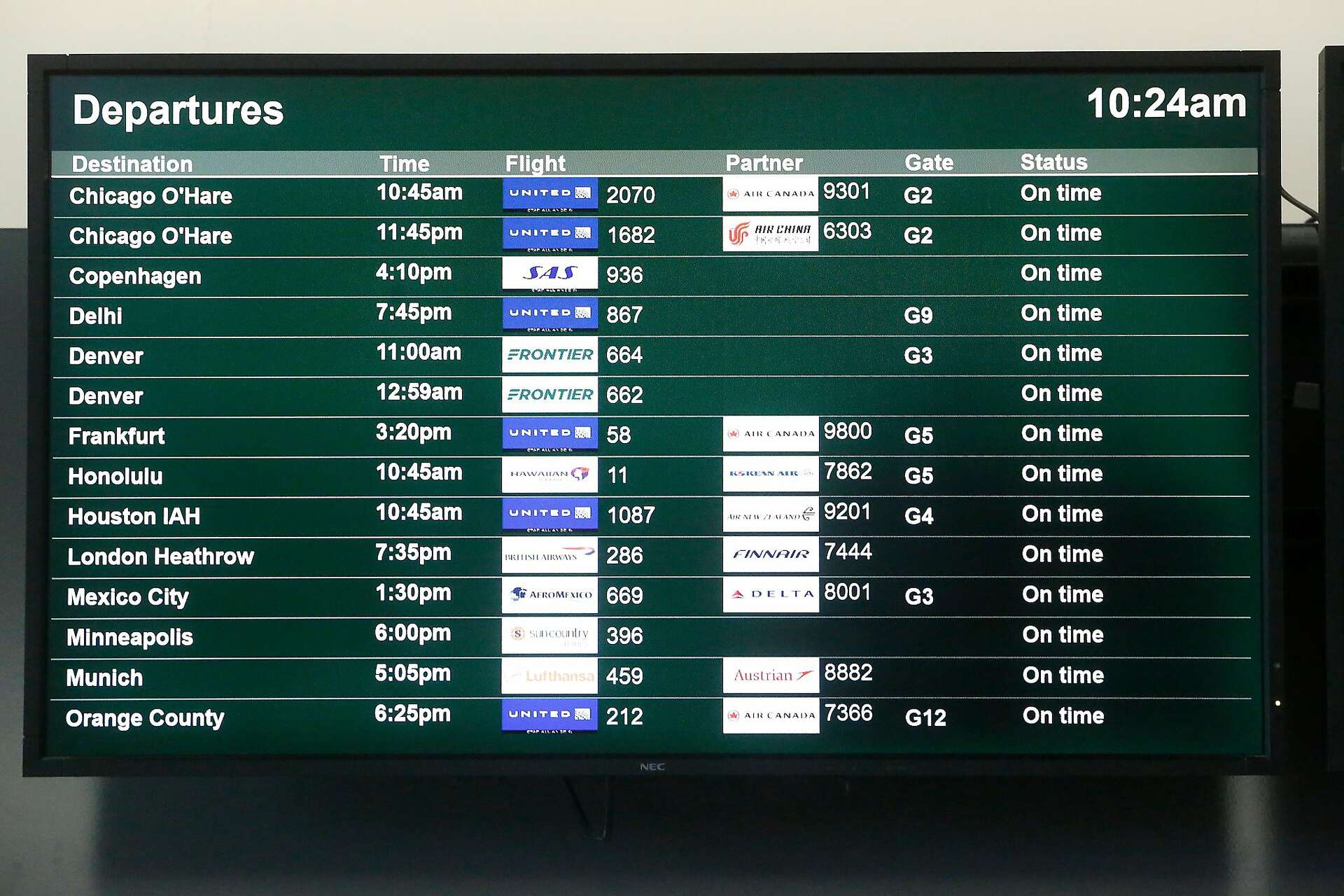
I thought you'd been to the US. This is an image of the San Franciso
flight board:
https://s.hdnux.com/photos/01/13/60/33/19859175/6/1920x0.jpg
Interesting. It's been many years since I was last in the US, and a lot
has changed in the world since then. I guess I was assuming that the US
had moved into the future at the same rate as the rest of the world.
On 24/11/26 09:55, Mike Spencer wrote:
Referering to noon as 12:00 PM has always annoyed me. Noon is ON/AT
the meridian, not post. Any argument I've heard for that locution
sounds like an angular version of fencepost error.
The people who do bus and train timetables have learnt how to handle
that. If the bus is due at noon or midnight, the timetable will say 11:59.
Exception: some timetabling people are smart enough to use a 24-hour clock.
In article <1795342425-12588@newsgrouper.org>,
athel.cb@gmail.com <user12588@newsgrouper.org.invalid> wrote:
However, all this suggests that teaching idiomatic English to a foreigner or >>a small child is less obvious than one might think. It's simpler in French: >>"Quinze minutes avant dix heures" works just fine.
It would definitely sound odd to my ears. I would never say anything but "dix heures moins le quart" or "neuf heures quarante cinq", depending on
the context.
On Sun, 22 Nov 2026 10:55:36 +0000, Hibou
<vpaereru-unmonitored@yahoo.com.invalid> wrote:
Le 22/11/2026 à 10:13, athel.cb@gmail.com a écrit :
Yesterday, talking to my monoglot (for the moment) francophone granddaughter,
I realized that there are five different systems for reporting the time in >>> ordinary everyday language, accordiung to the number of minutes after the hour:
For 0, we say nine o'clock;
For 5, 10, 20 or 25, we say 25 past nine or 25 to ten;
For 15, we say quarter past nine or quarter to ten;
For 30, we say half past nine, but NOT half to ten;
For other numbers we add the word "minutes", 23 minutes past nine.
If you say the wrong one you will not be laughed out of court and you'll be >>> understood. In some cases it won't even sound particularly odd: if you say >>> "25 minutes to ten" it will probably pass unnoticed.
And then there are regional variations - it wants ten minutes to the
hour, I'll meet you back [a bit after] of six, etc. (in Scots).
In some places "half six" means 5:30, while in others it means 6:30.
I know that in modern German, "halb sechs" means 5:30 ("halfway to
six") but I think that only applies to time.
On 24/11/26 09:55, Mike Spencer wrote:
Referering to noon as 12:00 PM has always annoyed me. Noon is ON/AT
the meridian, not post. Any argument I've heard for that locution
sounds like an angular version of fencepost error.
The people who do bus and train timetables have learnt how to handle
that. If the bus is due at noon or midnight, the timetable will say 11:59.
Exception: some timetabling people are smart enough to use a 24-hour clock.
On 2026-11-24, Peter Moylan wrote:
The people who do bus and train timetables have learnt how to handle
that. If the bus is due at noon or midnight, the timetable will say 11:59. >>
Exception: some timetabling people are smart enough to use a 24-hour clock.
I absolutely agree with that. This is the 21st century. Of course, I
also think everyone should be dragged kicking & screaming into C.19
with regard to units of measurement.
I have extrapolated incorrectly, though. Soon after arriving in
France, I said "treize heures et demi" & was told that that was
unidiomatic: if you're obviously using 24-hour time, you have to
specify the minutes as an integer.
I don't understand what trouble bus, train, or airplane passengers
would have if the timetable displayed a 12-hour, A/M system. If
they understand how to tell time, they understand the difference
between 8:12 AM and 8:12 PM. Displaying 20:12 just forces those
used to an AM/PM system to do a mental calculation.
This Australian Time Zone page displays the times in the AM/PM
format. https://www.timeanddate.com/time/zone/australia
That leads me to believe that the only time you see the 24-Hour
system is at the airport, bus station, or train station. I wonder
what your own watch or phone or clock displays.
Den 25.11.2026 kl. 21.31 skrev Adam Funk:
I have extrapolated incorrectly, though. Soon after arriving in
France, I said "treize heures et demi" & was told that that was
unidiomatic: if you're obviously using 24-hour time, you have to
specify the minutes as an integer.
An Ngram with "treize heures et demi,treize heures et trente" is quite strange.
If you start with 1960 as the first year, it seems that both expressions--
are rare, with "trente" as the winner.
With "une heure et" there are only hits with "trente".
On 2026-11-22, Pierre Jelenc wrote:
In article <1795342425-12588@newsgrouper.org>,
athel.cb@gmail.com <user12588@newsgrouper.org.invalid> wrote:
However, all this suggests that teaching idiomatic English to a foreigner or
a small child is less obvious than one might think. It's simpler in French: >>> "Quinze minutes avant dix heures" works just fine.
I'm pretty sure I've never heard that (in classes, when I studied in
France, or on French TV shows). I'm prepared to be corrected, though
(as always).
It would definitely sound odd to my ears. I would never say anything but
"dix heures moins le quart" or "neuf heures quarante cinq", depending on
the context.
Those are the versions I was taught & have heard.
I have extrapolated incorrectly, though. Soon after arriving in
France, I said "treize heures et demi" & was told that that was
unidiomatic: if you're obviously using 24-hour time, you have to
specify the minutes as an integer.
On 2026-11-23, Steve Hayes wrote:
In some places "half six" means 5:30, while in others it means 6:30.
Where in modern English for the first interpretation?
I know that in modern German, "halb sechs" means 5:30 ("halfway to
six") but I think that only applies to time.
On Tue, 24 Nov 2026 11:48:48 +1100, Peter Moylan <peter@pmoylan.org>
wrote:
On 24/11/26 09:55, Mike Spencer wrote:
Referering to noon as 12:00 PM has always annoyed me. Noon is ON/AT
the meridian, not post. Any argument I've heard for that locution
sounds like an angular version of fencepost error.
The people who do bus and train timetables have learnt how to handle
that. If the bus is due at noon or midnight, the timetable will say 11:59. >>
Exception: some timetabling people are smart enough to use a 24-hour clock.
I am mildly troubled when I see statements like this. It implies that
those capable of using a 24-hour clock are smarter than those that
prefer a 12-hour, AM/PM system.
The only situation I can think of when using a 24-hour clock is
significently better is when setting a digital alarm clock. You know,
the ones where you push buttons to set the time for the alarm to go
off. Using my digital alarm settings, I have to set the hour and
minute and then - using a different button - AM or PM.
I have, in the past, neglected to notice the second setting and set an
alarm that I thought would go off in the morning, but - instead - went
off in the evening. A 24-hour digital alarm would require setting
only the time.
I don't understand what trouble bus, train, or airplane passengers
would have if the timetable displayed a 12-hour, A/M system. If they understand how to tell time, they understand the difference between
8:12 AM and 8:12 PM. Displaying 20:12 just forces those used to an
AM/PM system to do a mental calculation.
Most time displays - on a watch, clock, or phone - are in the AM/PM
system whether analog or digital. Watches and phone displays with
24-hour displays are available, but not - by far - the most common.
(My iPhone has a setting to change the display to 24-Hour, but the
factory setting is 12-Hour.)
This Australian Time Zone page displays the times in the AM/PM format. https://www.timeanddate.com/time/zone/australia
That leads me to believe that the only time you see the 24-Hour system
is at the airport, bus station, or train station. I wonder what your
own watch or phone or clock displays.
On 25/11/2026 20:38, Adam Funk wrote:
On 2026-11-23, Steve Hayes wrote:
In some places "half six" means 5:30, while in others it means 6:30.
Where in modern English for the first interpretation?
I know that in modern German, "halb sechs" means 5:30 ("halfway to
six") but I think that only applies to time.
In Dutch also, I believe -- 'half zes'. In my [British] English, I'd >understand 'half six' to mean half past six, though.
A usage that I think of as American, but haven't heard in quite a while
is 'a quarter of six'. I may have known at one time, but I'm not sure
now whether that means a quarter _to_ six or a quarter _after_ six. Is
that expression still around in AmE?
On 26/11/26 09:28, Tony Cooper wrote:
I don't understand what trouble bus, train, or airplane passengers
would have if the timetable displayed a 12-hour, A/M system. If
they understand how to tell time, they understand the difference
between 8:12 AM and 8:12 PM. Displaying 20:12 just forces those
used to an AM/PM system to do a mental calculation.
I suspect, though, that few of them could reliably tell you the meaning
of 12 AM and 12 PM, and which is which. I think that's how this thread >started. In timetables, 0:00 and 24:00 clearly tell you which day is meant.
On Thu, 26 Nov 2026 10:27:16 +1100, Peter Moylan <peter@pmoylan.org>
wrote:
On 26/11/26 09:28, Tony Cooper wrote:
I don't understand what trouble bus, train, or airplane
passengers would have if the timetable displayed a 12-hour, A/M
system. If they understand how to tell time, they understand the
difference between 8:12 AM and 8:12 PM. Displaying 20:12 just
forces those used to an AM/PM system to do a mental calculation.
I suspect, though, that few of them could reliably tell you the
meaning of 12 AM and 12 PM, and which is which. I think that's how
this thread started. In timetables, 0:00 and 24:00 clearly tell you
which day is meant.
If you mean they couldn't explain what "AM" and "PM" stand for,
you're probably right. However, I can't imagine any adult that
doesn't know that any time stated as AM is morning to noon and any
time stated as PM is afternoon or to midnight, I don't agree.
On Wed, 25 Nov 2026 23:59:24 +0000, Phil <phil@anonymous.invalid>
wrote:
A usage that I think of as American, but haven't heard in quite a
while is 'a quarter of six'. I may have known at one time, but I'm
not sure now whether that means a quarter _to_ six or a quarter
_after_ six. Is that expression still around in AmE?
Certainly. "quarter to (number)" and "quarter after (number)" are
commonly used.
On Wed, 25 Nov 2026 10:37:13 +1100, Peter Moylan
<peter@pmoylan.org> wrote:
On 25/11/26 06:12, Johann 'Myrkraverk' Oskarsson wrote:
On 11/24/2026 8:48 AM, Peter Moylan wrote:
On 24/11/26 09:55, Mike Spencer wrote:
Referering to noon as 12:00 PM has always annoyed me. Noon is
ON/AT the meridian, not post. Any argument I've heard for
that locution sounds like an angular version of fencepost
error.
The people who do bus and train timetables have learnt how to
handle that. If the bus is due at noon or midnight, the
timetable will say 11:59.
Exception: some timetabling people are smart enough to use a
24-hour clock.
People still get the date wrong for flights scheduled 12:05am.
Granted, probably only in a given lifetime, but this is still an
error people need to learn from; the airlines give no warning.
Well, flights are a different matter. Airlines switched to
24-hour clocks years ago. I don't think I've ever seen am or pm
on an airport departure board.
I thought you'd been to the US. This is an image of the San
Franciso flight board:
https://s.hdnux.com/photos/01/13/60/33/19859175/6/1920x0.jpg
On Tue, 24 Nov 2026 11:48:48 +1100, Peter Moylan
<peter@pmoylan.org> wrote:
On 24/11/26 09:55, Mike Spencer wrote:
Referering to noon as 12:00 PM has always annoyed me. Noon is
ON/AT the meridian, not post. Any argument I've heard for that
locution sounds like an angular version of fencepost error.
The people who do bus and train timetables have learnt how to
handle that. If the bus is due at noon or midnight, the timetable
will say 11:59.
Exception: some timetabling people are smart enough to use a
24-hour clock.
I am mildly troubled when I see statements like this. It implies
that those capable of using a 24-hour clock are smarter than those
that prefer a 12-hour, AM/PM system.
The only situation I can think of when using a 24-hour clock is
significently better is when setting a digital alarm clock. You
know, the ones where you push buttons to set the time for the
alarm to go off. Using my digital alarm settings, I have to set
the hour and minute and then - using a different button - AM or
PM.
I have, in the past, neglected to notice the second setting and
set an alarm that I thought would go off in the morning, but -
instead - went off in the evening. A 24-hour digital alarm would
require setting only the time.
I don't understand what trouble bus, train, or airplane
passengers would have if the timetable displayed a 12-hour, A/M
system. If they understand how to tell time, they understand the
difference between 8:12 AM and 8:12 PM. Displaying 20:12 just
forces those used to an AM/PM system to do a mental calculation.
Most time displays - on a watch, clock, or phone - are in the
AM/PM system whether analog or digital. Watches and phone
displays with 24-hour displays are available, but not - by far -
the most common. (My iPhone has a setting to change the display to
24-Hour, but the factory setting is 12-Hour.)
This Australian Time Zone page displays the times in the AM/PM
format. https://www.timeanddate.com/time/zone/australia
That leads me to believe that the only time you see the 24-Hour
system is at the airport, bus station, or train station. I wonder
what your own watch or phone or clock displays.
On 26/11/26 16:08, Tony Cooper wrote:
On Wed, 25 Nov 2026 23:59:24 +0000, Phil <phil@anonymous.invalid>
wrote:
A usage that I think of as American, but haven't heard in quite a
while is 'a quarter of six'. I may have known at one time, but I'm
not sure now whether that means a quarter _to_ six or a quarter
_after_ six. Is that expression still around in AmE?
Certainly. "quarter to (number)" and "quarter after (number)" are
commonly used.
But Phil was referring to a quarter _of_ six. Is that before or after
six? Or is that term no longer used, so that nobody remembers what it meant?
I remember hearing it in the distant past, and being unsure what it meant.
On 25/11/26 11:51, Tony Cooper wrote:
On Wed, 25 Nov 2026 10:37:13 +1100, Peter Moylan <peter@pmoylan.org>
wrote:
On 25/11/26 06:12, Johann 'Myrkraverk' Oskarsson wrote:
On 11/24/2026 8:48 AM, Peter Moylan wrote:
On 24/11/26 09:55, Mike Spencer wrote:
Referering to noon as 12:00 PM has always annoyed me. Noon is
ON/AT the meridian, not post. Any argument I've heard for that
locution sounds like an angular version of fencepost error.
The people who do bus and train timetables have learnt how to
handle that. If the bus is due at noon or midnight, the timetable
will say 11:59.
Exception: some timetabling people are smart enough to use a
24-hour clock.
People still get the date wrong for flights scheduled 12:05am.
Granted, probably only in a given lifetime, but this is still an
error people need to learn from; the airlines give no warning.
Well, flights are a different matter. Airlines switched to 24-hour
clocks years ago. I don't think I've ever seen am or pm on an airport
departure board.
I thought you'd been to the US. This is an image of the San Franciso
flight board:
https://s.hdnux.com/photos/01/13/60/33/19859175/6/1920x0.jpg
Interesting. It's been many years since I was last in the US, and a lot
has changed in the world since then. I guess I was assuming that the US
had moved into the future at the same rate as the rest of the world.
On Tue, 24 Nov 2026 11:48:48 +1100, Peter Moylan <peter@pmoylan.org>
wrote:
On 24/11/26 09:55, Mike Spencer wrote:
Referering to noon as 12:00 PM has always annoyed me. Noon is ON/AT
the meridian, not post. Any argument I've heard for that locution
sounds like an angular version of fencepost error.
The people who do bus and train timetables have learnt how to handle
that. If the bus is due at noon or midnight, the timetable will say 11:59.
Exception: some timetabling people are smart enough to use a 24-hour clock.
I am mildly troubled when I see statements like this. It implies that
those capable of using a 24-hour clock are smarter than those that
prefer a 12-hour, AM/PM system.
On 25 Nov 2026, Tony Cooper wrote
On Tue, 24 Nov 2026 11:48:48 +1100, Peter Moylan
<peter@pmoylan.org> wrote:
On 24/11/26 09:55, Mike Spencer wrote:
Referering to noon as 12:00 PM has always annoyed me. Noon is
ON/AT the meridian, not post. Any argument I've heard for that
locution sounds like an angular version of fencepost error.
The people who do bus and train timetables have learnt how to
handle that. If the bus is due at noon or midnight, the timetable
will say 11:59.
Exception: some timetabling people are smart enough to use a
24-hour clock.
I am mildly troubled when I see statements like this. It implies
that those capable of using a 24-hour clock are smarter than those
that prefer a 12-hour, AM/PM system.
The only situation I can think of when using a 24-hour clock is significently better is when setting a digital alarm clock. You
know, the ones where you push buttons to set the time for the
alarm to go off. Using my digital alarm settings, I have to set
the hour and minute and then - using a different button - AM or
PM.
I have, in the past, neglected to notice the second setting and
set an alarm that I thought would go off in the morning, but -
instead - went off in the evening. A 24-hour digital alarm would
require setting only the time.
I don't understand what trouble bus, train, or airplane
passengers would have if the timetable displayed a 12-hour, A/M
system. If they understand how to tell time, they understand the difference between 8:12 AM and 8:12 PM. Displaying 20:12 just
forces those used to an AM/PM system to do a mental calculation.
Most time displays - on a watch, clock, or phone - are in the
AM/PM system whether analog or digital. Watches and phone
displays with 24-hour displays are available, but not - by far -
the most common. (My iPhone has a setting to change the display to
24-Hour, but the factory setting is 12-Hour.)
This Australian Time Zone page displays the times in the AM/PM
format. https://www.timeanddate.com/time/zone/australia
That leads me to believe that the only time you see the 24-Hour
system is at the airport, bus station, or train station. I wonder
what your own watch or phone or clock displays.
FWIW, I wear an analogue watch (with a 12-hour dial and hands), but
my phone is set to 24-hour display.
That doesn't strike me as
unusual.
On 25/11/2026 20:31, Adam Funk wrote:
On 2026-11-22, Pierre Jelenc wrote:
In article <1795342425-12588@newsgrouper.org>,
athel.cb@gmail.com <user12588@newsgrouper.org.invalid> wrote:
However, all this suggests that teaching idiomatic English to a foreigner or
a small child is less obvious than one might think. It's simpler in French:
"Quinze minutes avant dix heures" works just fine.
I'm pretty sure I've never heard that (in classes, when I studied in
France, or on French TV shows). I'm prepared to be corrected, though
(as always).
It would definitely sound odd to my ears. I would never say anything but >>> "dix heures moins le quart" or "neuf heures quarante cinq", depending on >>> the context.
Those are the versions I was taught & have heard.
I have extrapolated incorrectly, though. Soon after arriving in
France, I said "treize heures et demi" & was told that that was
unidiomatic: if you're obviously using 24-hour time, you have to
specify the minutes as an integer.
In English, too, 'half past thirteen' would sound odd. Perfectly understandable, unambiguous, but unidiomatic.
I have missed one flight in my life. That was an Aer Lingus flight
from Dublin to Edinburgh in 1969.
We arrived at the airport with time to spare and checked our bags. We thought that was the "check-in". When we later went to the gate a few minutes before the departure we were turned-away. We were supposed to
have checked-in at the gate as well as checking our bags.*
Our bags went to Edinburgh and we took a later flight to Glascow and a
train to Edinburgh and our pre-booked B&B. We had to wait until the
next day to get our bags.
Aer Lingus was quite cooperative, though. No fuss or rate change for
the switched destinations and the bags were delivered by breakfast.
*In the US, both bag checking and checking in are done at the same
counter.
On 2026-11-26, Tony Cooper wrote:
...
I have missed one flight in my life. That was an Aer Lingus flight
from Dublin to Edinburgh in 1969.
We arrived at the airport with time to spare and checked our bags. We
thought that was the "check-in". When we later went to the gate a few
minutes before the departure we were turned-away. We were supposed to
have checked-in at the gate as well as checking our bags.*
Our bags went to Edinburgh and we took a later flight to Glascow and a
train to Edinburgh and our pre-booked B&B. We had to wait until the
next day to get our bags.
Aer Lingus was quite cooperative, though. No fuss or rate change for
the switched destinations and the bags were delivered by breakfast.
*In the US, both bag checking and checking in are done at the same
counter.
I've only ever encountered checking in & checking bags as one process
(with a slight exception) anywhere, but I didn't start flying until
the 1980s. The only exception I've seen was checking in, getting the
airline luggage label, and then taking the labelled and registered bag
to a bag drop counter --- but even then, you couldn't check the bag
without first checking in.
On 2026-11-25, Tony Cooper wrote:
On Tue, 24 Nov 2026 11:48:48 +1100, Peter Moylan <peter@pmoylan.org>
wrote:
On 24/11/26 09:55, Mike Spencer wrote:
Referering to noon as 12:00 PM has always annoyed me. Noon is ON/AT
the meridian, not post. Any argument I've heard for that locution
sounds like an angular version of fencepost error.
The people who do bus and train timetables have learnt how to handle >>>that. If the bus is due at noon or midnight, the timetable will say 11:59. >>>
Exception: some timetabling people are smart enough to use a 24-hour clock. >>
I am mildly troubled when I see statements like this. It implies that
those capable of using a 24-hour clock are smarter than those that
prefer a 12-hour, AM/PM system.
I don't think he meant "smart enough [to be able] to use a 24-hour
clock" but rather "smart enough [to choose] to use a 24-hour clock".
When being dropped off, I can check my bags with the porter at
Departures, but I have to check-in at the airline counter. There's no
fee for this, but tipping is expected.
On 26/11/26 16:08, Tony Cooper wrote:
On Wed, 25 Nov 2026 23:59:24 +0000, Phil <phil@anonymous.invalid>
wrote:
A usage that I think of as American, but haven't heard in quite a
while is 'a quarter of six'. I may have known at one time, but I'm
not sure now whether that means a quarter _to_ six or a quarter
_after_ six. Is that expression still around in AmE?
Certainly. "quarter to (number)" and "quarter after (number)" are
commonly used.
But Phil was referring to a quarter _of_ six. Is that before or after
six? Or is that term no longer used, so that nobody remembers what it
meant?
I remember hearing it in the distant past, and being unsure what it meant.
On 2026-11-25, Peter Moylan wrote:
On 25/11/26 11:51, Tony Cooper wrote:
On Wed, 25 Nov 2026 10:37:13 +1100, Peter Moylan <peter@pmoylan.org>
wrote:
On 25/11/26 06:12, Johann 'Myrkraverk' Oskarsson wrote:
On 11/24/2026 8:48 AM, Peter Moylan wrote:
On 24/11/26 09:55, Mike Spencer wrote:
Referering to noon as 12:00 PM has always annoyed me. Noon is
ON/AT the meridian, not post. Any argument I've heard for that
locution sounds like an angular version of fencepost error.
The people who do bus and train timetables have learnt how to
handle that. If the bus is due at noon or midnight, the timetable
will say 11:59.
Exception: some timetabling people are smart enough to use a
24-hour clock.
People still get the date wrong for flights scheduled 12:05am.
Granted, probably only in a given lifetime, but this is still an
error people need to learn from; the airlines give no warning.
Well, flights are a different matter. Airlines switched to 24-hour
clocks years ago. I don't think I've ever seen am or pm on an airport
departure board.
I thought you'd been to the US. This is an image of the San Franciso
flight board:
https://s.hdnux.com/photos/01/13/60/33/19859175/6/1920x0.jpg
Interesting. It's been many years since I was last in the US, and a lot
has changed in the world since then. I guess I was assuming that the US
had moved into the future at the same rate as the rest of the world.
"If it's December 1941 in Casablanca, what time is it in New York?"
On 26/11/26 16:50, Tony Cooper wrote:
On Thu, 26 Nov 2026 10:27:16 +1100, Peter Moylan <peter@pmoylan.org>
wrote:
On 26/11/26 09:28, Tony Cooper wrote:
I don't understand what trouble bus, train, or airplane
passengers would have if the timetable displayed a 12-hour, A/M
system. If they understand how to tell time, they understand the
difference between 8:12 AM and 8:12 PM. Displaying 20:12 just
forces those used to an AM/PM system to do a mental calculation.
I suspect, though, that few of them could reliably tell you the
meaning of 12 AM and 12 PM, and which is which. I think that's how
this thread started. In timetables, 0:00 and 24:00 clearly tell you
which day is meant.
If you mean they couldn't explain what "AM" and "PM" stand for,
you're probably right. However, I can't imagine any adult that
doesn't know that any time stated as AM is morning to noon and any
time stated as PM is afternoon or to midnight, I don't agree.
Your rule above seems to imply that 12 AM is noon, but other people have
said that noon is 12 PM. I must admit that I don't know which of these
is true.
HVS <office@REMOVETHISwhhvs.co.uk> posted:
FWIW, I wear an analogue watch (with a 12-hour dial and hands), but
my phone is set to 24-hour display.
That makes two of us
That doesn't strike me as
unusual.
Tony Cooper hat am 26.11.2026 um 18:23 geschrieben:
When being dropped off, I can check my bags with the porter at
Departures, but I have to check-in at the airline counter. There's no
fee for this, but tipping is expected.
Tipping at an airline counter??? Are you joking or is it another US quirk?
In Europe (personal experience: Germany, UK, Italy, Spain) it goes like
this.
1. If you have baggage to be stuffed into the airplane, you go to the
airline counter and give it there. Otherwise, go straight to 2. In some >airports, like Berlin, you go to a conveyor belt and check your ba >yourself.ggage
On 26/11/2026 16:25, athel.cb@gmail.com wrote:
HVS <office@REMOVETHISwhhvs.co.uk> posted:
FWIW, I wear an analogue watch (with a 12-hour dial and hands), but
my phone is set to 24-hour display.
That makes two of us
That doesn't strike me as
unusual.
24 hour and 24 hour here.
I hate it when I find out that some device I will _only_ use 12 Hour
display format.
I find it simpler to translate into AM/PM when talking to my wife, but
in written form she is untroubled by 24 hour notation.
Possibly a remnant of the days when instead of asking for the time you
might say "What hour is it?"
(Shakespeare seems to use that a lot.)
On 26/11/2026 06:41, Peter Moylan wrote:
On 26/11/26 16:50, Tony Cooper wrote:In my view, any system that mentions "12 AM" or "12 PM" is broken and
On Thu, 26 Nov 2026 10:27:16 +1100, Peter Moylan <peter@pmoylan.org>
wrote:
On 26/11/26 09:28, Tony Cooper wrote:
I don't understand what trouble bus, train, or airplane
passengers would have if the timetable displayed a 12-hour, A/M
system. If they understand how to tell time, they understand the
difference between 8:12 AM and 8:12 PM. Displaying 20:12 just
forces those used to an AM/PM system to do a mental calculation.
I suspect, though, that few of them could reliably tell you the
meaning of 12 AM and 12 PM, and which is which. I think that's how
this thread started. In timetables, 0:00 and 24:00 clearly tell you
which day is meant.
If you mean they couldn't explain what "AM" and "PM" stand for,
you're probably right. However, I can't imagine any adult that
doesn't know that any time stated as AM is morning to noon and any
time stated as PM is afternoon or to midnight, I don't agree.
Your rule above seems to imply that 12 AM is noon, but other people have
said that noon is 12 PM. I must admit that I don't know which of these
is true.
not fit for purpose - unless the actual purpose is to cause confusion
and distruption.
On Thu, 26 Nov 2026 17:45:33 +1100, Peter Moylan <peter@pmoylan.org>
wrote:
On 26/11/26 16:08, Tony Cooper wrote:
On Wed, 25 Nov 2026 23:59:24 +0000, Phil <phil@anonymous.invalid>
wrote:
A usage that I think of as American, but haven't heard in quite a
while is 'a quarter of six'. I may have known at one time, but I'm
not sure now whether that means a quarter _to_ six or a quarter
_after_ six. Is that expression still around in AmE?
Certainly. "quarter to (number)" and "quarter after (number)" are
commonly used.
But Phil was referring to a quarter _of_ six. Is that before or after
six? Or is that term no longer used, so that nobody remembers what it meant? >>
I remember hearing it in the distant past, and being unsure what it meant.
I don't find a difference between "quarter of" and "quarter to" in
time context. I would use or easily understand either.
On 26/11/2026 19:01, Sam Plusnet wrote:
Possibly a remnant of the days when instead of asking for the time you
might say "What hour is it?"
(Shakespeare seems to use that a lot.)
Somehow reminded me of
"What's the time? Five past something. I must get that little hand fixed" (Tony Hancock)
On 2026-11-25, Tony Cooper wrote:
On Tue, 24 Nov 2026 11:48:48 +1100, Peter Moylan <peter@pmoylan.org>
wrote:
The people who do bus and train timetables have learnt how to handleI am mildly troubled when I see statements like this. It implies that
that. If the bus is due at noon or midnight, the timetable will say 11:59. >>>
Exception: some timetabling people are smart enough to use a 24-hour clock. >>
those capable of using a 24-hour clock are smarter than those that
prefer a 12-hour, AM/PM system.
I don't think he meant "smart enough [to be able] to use a 24-hour
clock" but rather "smart enough [to choose] to use a 24-hour clock".
On 26/11/2026 06:45, Peter Moylan wrote:
On 26/11/26 16:08, Tony Cooper wrote:
On Wed, 25 Nov 2026 23:59:24 +0000, Phil <phil@anonymous.invalid>
wrote:
A usage that I think of as American, but haven't heard in quite a
while is 'a quarter of six'. I may have known at one time, but I'm
not sure now whether that means a quarter _to_ six or a quarter
_after_ six. Is that expression still around in AmE?
Certainly. "quarter to (number)" and "quarter after (number)" are
commonly used.
But Phil was referring to a quarter _of_ six. Is that before or after
six? Or is that term no longer used, so that nobody remembers what it meant?
I remember hearing it in the distant past, and being unsure what it meant.
I have always understood it as a shortened form of "It lacks a quarter
(hour) of Six".
Possibly a remnant of the days when instead of asking for the time you
might say "What hour is it?"
(Shakespeare seems to use that a lot.)
HVS <office@REMOVETHISwhhvs.co.uk> posted:
On 25 Nov 2026, Tony Cooper wrote
On Tue, 24 Nov 2026 11:48:48 +1100, Peter Moylan
<peter@pmoylan.org> wrote:
On 24/11/26 09:55, Mike Spencer wrote:
Referering to noon as 12:00 PM has always annoyed me. Noon is
ON/AT the meridian, not post. Any argument I've heard for that
locution sounds like an angular version of fencepost error.
The people who do bus and train timetables have learnt how to
handle that. If the bus is due at noon or midnight, the timetable
will say 11:59.
Exception: some timetabling people are smart enough to use a
24-hour clock.
I am mildly troubled when I see statements like this. It implies
that those capable of using a 24-hour clock are smarter than those
that prefer a 12-hour, AM/PM system.
The only situation I can think of when using a 24-hour clock is
significently better is when setting a digital alarm clock. You
know, the ones where you push buttons to set the time for the
alarm to go off. Using my digital alarm settings, I have to set
the hour and minute and then - using a different button - AM or
PM.
I have, in the past, neglected to notice the second setting and
set an alarm that I thought would go off in the morning, but -
instead - went off in the evening. A 24-hour digital alarm would
require setting only the time.
I don't understand what trouble bus, train, or airplane
passengers would have if the timetable displayed a 12-hour, A/M
system. If they understand how to tell time, they understand the
difference between 8:12 AM and 8:12 PM. Displaying 20:12 just
forces those used to an AM/PM system to do a mental calculation.
Most time displays - on a watch, clock, or phone - are in the
AM/PM system whether analog or digital. Watches and phone
displays with 24-hour displays are available, but not - by far -
the most common. (My iPhone has a setting to change the display to
24-Hour, but the factory setting is 12-Hour.)
This Australian Time Zone page displays the times in the AM/PM
format. https://www.timeanddate.com/time/zone/australia
That leads me to believe that the only time you see the 24-Hour
system is at the airport, bus station, or train station. I wonder
what your own watch or phone or clock displays.
FWIW, I wear an analogue watch (with a 12-hour dial and hands), but
my phone is set to 24-hour display.
That makes two of us
That doesn't strike me as
unusual.
On Thu, 26 Nov 2026 15:22:09 +0000, Adam Funk <a24061@ducksburg.com>
wrote:
On 2026-11-25, Tony Cooper wrote:
On Tue, 24 Nov 2026 11:48:48 +1100, Peter Moylan <peter@pmoylan.org>
wrote:
On 24/11/26 09:55, Mike Spencer wrote:
Referering to noon as 12:00 PM has always annoyed me. Noon is ON/AT >>>>> the meridian, not post. Any argument I've heard for that locution
sounds like an angular version of fencepost error.
The people who do bus and train timetables have learnt how to handle
that. If the bus is due at noon or midnight, the timetable will say 11:59. >>>>
Exception: some timetabling people are smart enough to use a 24-hour clock.
I am mildly troubled when I see statements like this. It implies that
those capable of using a 24-hour clock are smarter than those that
prefer a 12-hour, AM/PM system.
I don't think he meant "smart enough [to be able] to use a 24-hour
clock" but rather "smart enough [to choose] to use a 24-hour clock".
I don't think either is the more intelligent choice. The intelligent
choice is using the display that is most commonly used by most of the
people who will be affected.
We see the same argument about units of measurements for recipes and
units of distance or speed in roadsigns.
On 26/11/2026 19:08, Sam Plusnet wrote:
On 26/11/2026 06:41, Peter Moylan wrote:
On 26/11/26 16:50, Tony Cooper wrote:In my view, any system that mentions "12 AM" or "12 PM" is broken and
On Thu, 26 Nov 2026 10:27:16 +1100, Peter Moylan <peter@pmoylan.org>
wrote:
On 26/11/26 09:28, Tony Cooper wrote:
I don't understand what trouble bus, train, or airplane
passengers would have if the timetable displayed a 12-hour, A/M
system. If they understand how to tell time, they understand the
difference between 8:12 AM and 8:12 PM. Displaying 20:12 just
forces those used to an AM/PM system to do a mental calculation.
I suspect, though, that few of them could reliably tell you the
meaning of 12 AM and 12 PM, and which is which. I think that's how
this thread started. In timetables, 0:00 and 24:00 clearly tell you
which day is meant.
If you mean they couldn't explain what "AM" and "PM" stand for,
you're probably right. However, I can't imagine any adult that
doesn't know that any time stated as AM is morning to noon and any
time stated as PM is afternoon or to midnight, I don't agree.
Your rule above seems to imply that 12 AM is noon, but other people have >> said that noon is 12 PM. I must admit that I don't know which of these
is true.
not fit for purpose - unless the actual purpose is to cause confusion
and distruption.
I agree. The "m" stands for (in English) "midday" ie 12.00 or 24.00. 12
noon cannot be before or after noon.
On 26/11/2026 19:08, Sam Plusnet wrote:
On 26/11/2026 06:41, Peter Moylan wrote:I agree. The "m" stands for (in English) "midday" ie 12.00 or 24.00. 12
On 26/11/26 16:50, Tony Cooper wrote:In my view, any system that mentions "12 AM" or "12 PM" is broken and
On Thu, 26 Nov 2026 10:27:16 +1100, Peter Moylan <peter@pmoylan.org>
wrote:
On 26/11/26 09:28, Tony Cooper wrote:
I don't understand what trouble bus, train, or airplane
passengers would have if the timetable displayed a 12-hour, A/M
system. If they understand how to tell time, they understand the >>>>>> difference between 8:12 AM and 8:12 PM. Displaying 20:12 just
forces those used to an AM/PM system to do a mental calculation.
I suspect, though, that few of them could reliably tell you the
meaning of 12 AM and 12 PM, and which is which. I think that's how
this thread started. In timetables, 0:00 and 24:00 clearly tell you
which day is meant.
If you mean they couldn't explain what "AM" and "PM" stand for,
you're probably right. However, I can't imagine any adult that
doesn't know that any time stated as AM is morning to noon and any
time stated as PM is afternoon or to midnight, I don't agree.
Your rule above seems to imply that 12 AM is noon, but other people have >>> said that noon is 12 PM. I must admit that I don't know which of these
is true.
not fit for purpose - unless the actual purpose is to cause confusion
and distruption.
noon cannot be before or after noon.
On 26/11/26 16:08, Tony Cooper wrote:
On Wed, 25 Nov 2026 23:59:24 +0000, Phil <phil@anonymous.invalid>
wrote:
A usage that I think of as American, but haven't heard in quite a
while is 'a quarter of six'. I may have known at one time, but I'm
not sure now whether that means a quarter _to_ six or a quarter
_after_ six. Is that expression still around in AmE?
Certainly. "quarter to (number)" and "quarter after (number)" are
commonly used.
But Phil was referring to a quarter _of_ six. Is that before or after
six? Or is that term no longer used, so that nobody remembers what it meant?
I remember hearing it in the distant past, and being unsure what it meant.
On 26/11/2026 19:01, Sam Plusnet wrote:
Possibly a remnant of the days when instead of asking for the time you
might say "What hour is it?"
(Shakespeare seems to use that a lot.)
Somehow reminded me of
"What's the time? Five past something. I must get that little hand fixed" (Tony Hancock)
On Thu, 26 Nov 2026 19:13:14 +0000, Sam Plusnet <not@home.com> wrote:
On 26/11/2026 16:25, athel.cb@gmail.com wrote:
HVS <office@REMOVETHISwhhvs.co.uk> posted:
FWIW, I wear an analogue watch (with a 12-hour dial and hands), but
my phone is set to 24-hour display.
That makes two of us
That doesn't strike me as
unusual.
24 hour and 24 hour here.
I hate it when I find out that some device I will _only_ use 12 Hour
display format.
I find it simpler to translate into AM/PM when talking to my wife, but
in written form she is untroubled by 24 hour notation.
In a post above, you said:
"In my view, any system that mentions "12 AM" or "12 PM" is broken and
not fit for purpose - unless the actual purpose is to cause confusion
and distruption."
It's a bit unkind to brag that you deliberately cause your wife
confusion and disruption.
On 27/11/26 02:22, Adam Funk wrote:
On 2026-11-25, Tony Cooper wrote:
On Tue, 24 Nov 2026 11:48:48 +1100, Peter Moylan <peter@pmoylan.org>
wrote:
The people who do bus and train timetables have learnt how to handle
that. If the bus is due at noon or midnight, the timetable will say 11:59. >>>>
Exception: some timetabling people are smart enough to use a 24-hour clock.
I am mildly troubled when I see statements like this. It implies that
those capable of using a 24-hour clock are smarter than those that
prefer a 12-hour, AM/PM system.
I don't think he meant "smart enough [to be able] to use a 24-hour
clock" but rather "smart enough [to choose] to use a 24-hour clock".
I actually meant "smart enough to produce a timetable that was easy to >read".
On Fri, 27 Nov 2026 08:36:04 +1100, Peter Moylan <peter@pmoylan.org>
wrote:
On 27/11/26 02:22, Adam Funk wrote:
On 2026-11-25, Tony Cooper wrote:
On Tue, 24 Nov 2026 11:48:48 +1100, Peter Moylan <peter@pmoylan.org>
wrote:
The people who do bus and train timetables have learnt how to handle >>>>> that. If the bus is due at noon or midnight, the timetable will say 11:59.
Exception: some timetabling people are smart enough to use a 24-hour clock.
I am mildly troubled when I see statements like this. It implies that >>>> those capable of using a 24-hour clock are smarter than those that
prefer a 12-hour, AM/PM system.
I don't think he meant "smart enough [to be able] to use a 24-hour
clock" but rather "smart enough [to choose] to use a 24-hour clock".
I actually meant "smart enough to produce a timetable that was easy to
read".
Once again, I ask how you come up with the idea that the millions of Americans who pass through our airports using the AM/PM system on the
flight boards do not find them "easy to read"?
The vast majority of people who look at the timetable know
approximately when the flight they're checking on is due to arrive or
depart. They aren't going to be confused if the 3:15 flight is
scheduled for 3:15 in the morning or 3:15 in the afternoon because of
what the board reads.
What they're looking for is that other column that states the current
status of the flight and the column of the gate number if they are
departing.
Sure, there will be some novice traveler in the terminal who is faced
with a system they're not familiar with, but that's going to be true whichever system is used.
The more you object, the more is sounds like that "If it's not done my
way, it must be wrong" refrain.
Drifting a bit...When did countries switch to the 24-Hour style? The
last time I was in an European airport was in Germany in 1988. I
don't recall the time being expressed in the 24-Hour format then, but
I may be wrong. It wouldn't have made a difference because - having
been in the military - I understood the 24-Hour system.
On 2026-11-23, Steve Hayes wrote:
In some places "half six" means 5:30, while in others it means 6:30.
Where in modern English for the first interpretation?
I know that in modern German, "halb sechs" means 5:30 ("halfway to
six") but I think that only applies to time. AIUI, however, in old
Germanic languages, including Old English, "half [n]" commonly meant
n - 1 + 0.5, so you could describe someone as "half six feet tall"
(approx. 5'6"), or order "half three pints of mead".
FWIW, I wear an analogue watch (with a 12-hour dial and hands), but
my phone is set to 24-hour display. That doesn't strike me as
unusual.
Den 26.11.2026 kl. 16.13 skrev HVS:
FWIW, I wear an analogue watch (with a 12-hour dial and hands), but
my phone is set to 24-hour display. That doesn't strike me as
unusual.
My watch is digital but displays the time with three pointers, so my
setup is basically the same as yours. My guess is that ypu'd find the
same with all Danes who wear a watch.
I hardly ever look at my watch.
On 11/27/2026 1:40 AM, Tony Cooper wrote:
On Thu, 26 Nov 2026 15:22:09 +0000, Adam Funk <a24061@ducksburg.com>
wrote:
On 2026-11-25, Tony Cooper wrote:
On Tue, 24 Nov 2026 11:48:48 +1100, Peter Moylan <peter@pmoylan.org>
wrote:
On 24/11/26 09:55, Mike Spencer wrote:
Referering to noon as 12:00 PM has always annoyed me. Noon is ON/AT >>>>> the meridian, not post. Any argument I've heard for that locution >>>>> sounds like an angular version of fencepost error.
The people who do bus and train timetables have learnt how to handle >>>> that. If the bus is due at noon or midnight, the timetable will say
11:59.
Exception: some timetabling people are smart enough to use a 24-hour >>>>clock.
I am mildly troubled when I see statements like this. It implies that >>> those capable of using a 24-hour clock are smarter than those that
prefer a 12-hour, AM/PM system.
I don't think he meant "smart enough [to be able] to use a 24-hour
clock" but rather "smart enough [to choose] to use a 24-hour clock".
I don't think either is the more intelligent choice. The intelligent choice is using the display that is most commonly used by most of the people who will be affected.
We see the same argument about units of measurements for recipes and
units of distance or speed in roadsigns.
I'm particular to cubits for units of measurements. It saves me the
trouble of explaining the length because nobody knows what I'm talking
about.
I'm fancy. I wear an analogue watch with a twelve hour dial, like
normies, and an additional twenty-four hour dial just in case I get con- fused about whether it's day or night.
That was something I discovered after I bought the watch, but it's sort
of neat to know it's there. I mean, it /can/ save the trouble of look-
ing out the window to see if it's daylight or night time.
On 11/27/2026 5:14 PM, Bertel Lund Hansen wrote:
Den 26.11.2026 kl. 16.13 skrev HVS:
FWIW, I wear an analogue watch (with a 12-hour dial and hands), but
my phone is set to 24-hour display. That doesn't strike me as
unusual.
My watch is digital but displays the time with three pointers, so my
setup is basically the same as yours. My guess is that ypu'd find the
same with all Danes who wear a watch.
I hardly ever look at my watch.
I on the other hand use mine "all the time." Though not while I'm at
home, as I put it on before leaving the house.
It's less about telling the time than it is to test my eyes. It appears
in middle age my eyesight started to get better again, and looking at
small objects near by isn't uncomfortable/painful anymore. Since ap- proximately one or two months ago, I started to be able to read the
small dials without too much trouble. And about two or three years ago
it was almost impossible for me to use a phone without reading glasses.
It's not a problem now, and I never bought the reading glasses.
That was an interesting development. I recommend it for everyone who
doesn't want to use reading glasses.
Best wishes, and happy wrist watches!
Drifting a bit...When did countries switch to the 24-Hour style? The
last time I was in an European airport was in Germany in 1988. I
don't recall the time being expressed in the 24-Hour format then, but
I may be wrong. It wouldn't have made a difference because - having
been in the military - I understood the 24-Hour system.
On Wed, 25 Nov 2026 20:38:16 +0000, Adam Funk <a24061@ducksburg.com>
wrote:
On 2026-11-23, Steve Hayes wrote:
In some places "half six" means 5:30, while in others it means 6:30.
Where in modern English for the first interpretation?
In South Africa, where, in the past, most English-speaking people
learnt Afrikaans at school, where 5:30 is "half-ses", and so if
someone said "Half six", referring to time, it would be interpreted
that way by English speakers, even if they didn't say it that way.
They would say 6:30 as either "Six thirty" or "half past six".
--I know that in modern German, "halb sechs" means 5:30 ("halfway to
six") but I think that only applies to time. AIUI, however, in old
Germanic languages, including Old English, "half [n]" commonly meant
n - 1 + 0.5, so you could describe someone as "half six feet tall"
(approx. 5'6"), or order "half three pints of mead".
The preceding discussion was only about time, and not about other measurements.
Johann 'Myrkraverk' Oskarsson <johann@myrkraverk.invalid> wrote:
[-]
I'm fancy. I wear an analogue watch with a twelve hour dial, like
normies, and an additional twenty-four hour dial just in case I get con-
fused about whether it's day or night.
That was something I discovered after I bought the watch, but it's sort
of neat to know it's there. I mean, it /can/ save the trouble of look-
ing out the window to see if it's daylight or night time.
Time for xkcd 1420: Watches
Jan
(still gloriously free)
Johann 'Myrkraverk' Oskarsson <johann@myrkraverk.invalid> wrote:
On 11/27/2026 5:14 PM, Bertel Lund Hansen wrote:
Den 26.11.2026 kl. 16.13 skrev HVS:
FWIW, I wear an analogue watch (with a 12-hour dial and hands), but
my phone is set to 24-hour display. That doesn't strike me as
unusual.
My watch is digital but displays the time with three pointers, so my
setup is basically the same as yours. My guess is that ypu'd find the
same with all Danes who wear a watch.
I hardly ever look at my watch.
I on the other hand use mine "all the time." Though not while I'm at
home, as I put it on before leaving the house.
It's less about telling the time than it is to test my eyes. It appears
in middle age my eyesight started to get better again, and looking at
small objects near by isn't uncomfortable/painful anymore. Since ap-
proximately one or two months ago, I started to be able to read the
small dials without too much trouble. And about two or three years ago
it was almost impossible for me to use a phone without reading glasses.
It's not a problem now, and I never bought the reading glasses.
That was an interesting development. I recommend it for everyone who
doesn't want to use reading glasses.
Best wishes, and happy wrist watches!
That is not good news.
Changing focal length, usually in the direction of more myopic,
(like you have)
may be the first sign of cataract developing.
You really need to keep track of this,
and maybe to consult some professional about it,
Jan
J. J. Lodder pounded on thar keyboard to tell us
Johann 'Myrkraverk' Oskarsson <johann@myrkraverk.invalid> wrote:
[-]
I'm fancy. I wear an analogue watch with a twelve hour dial, like
normies, and an additional twenty-four hour dial just in case I get con- >>> fused about whether it's day or night.
That was something I discovered after I bought the watch, but it's sort
of neat to know it's there. I mean, it /can/ save the trouble of look- >>> ing out the window to see if it's daylight or night time.
Time for xkcd 1420: Watches
Jan
(still gloriously free)
We're still in the midst of using large pocket watches that also make
noises at strange times.
/dps
J. J. Lodder pounded on thar keyboard to tell us
Johann 'Myrkraverk' Oskarsson <johann@myrkraverk.invalid> wrote:
[-]
I'm fancy. I wear an analogue watch with a twelve hour dial, like
normies, and an additional twenty-four hour dial just in case I get con- >>> fused about whether it's day or night.
That was something I discovered after I bought the watch, but it's sort
of neat to know it's there. I mean, it /can/ save the trouble of look-
ing out the window to see if it's daylight or night time.
Time for xkcd 1420: Watches
Jan
(still gloriously free)
We're still in the midst of using large pocket watches that also make
noises at strange times.
Sam Plusnet <not@home.com> wrote:
I have always understood it as a shortened form of "It lacks a quarter
(hour) of Six".
Possibly a remnant of the days when instead of asking for the time you
might say "What hour is it?"
(Shakespeare seems to use that a lot.)
Not surprising. Shakespeare, who died in 1616,
would not have known the time of the day to about an hour.
All he had for reference were clocks on church towers
that would be accurate to a quarter of an hour at best.
(sundials were even less accurateastrolabes were not really
His personnages living in earlier centuries
would have had even less idea of the real time.
Human subjective time, based on an estimate of the height of the sun,
the strength of the light, or the rumbling of the stomach,
would be even less accurate.
The whole concept that time could be accurate to a minute was lacking.
(until Huygens invented pendulum clocks, a century later) [...]
Le 26/11/2026 à 21:47, J. J. Lodder a écrit :
Sam Plusnet <not@home.com> wrote:
I have always understood it as a shortened form of "It lacks a quarter
(hour) of Six".
Possibly a remnant of the days when instead of asking for the time you
might say "What hour is it?"
(Shakespeare seems to use that a lot.)
"Well, but what's o'clock?" etc..
Not surprising. Shakespeare, who died in 1616,
would not have known the time of the day to about an hour.
All he had for reference were clocks on church towers
that would be accurate to a quarter of an hour at best.
(sundials were even less accurateastrolabes were not really
His personnages living in earlier centuries
would have had even less idea of the real time.
Clouds, that's the problem with sundials. "I wandered lonely as a
cloud"? Rubbish! Clouds roam in gangs, hold each other's hands.
Human subjective time, based on an estimate of the height of the sun,
the strength of the light, or the rumbling of the stomach,
would be even less accurate.
The whole concept that time could be accurate to a minute was lacking. (until Huygens invented pendulum clocks, a century later) [...]
Real accuracy had to wait for Harrison - or do I mean Japanese railways?
On 11/27/2026 7:10 PM, J. J. Lodder wrote:
Johann 'Myrkraverk' Oskarsson <johann@myrkraverk.invalid> wrote:
On 11/27/2026 5:14 PM, Bertel Lund Hansen wrote:
Den 26.11.2026 kl. 16.13 skrev HVS:
FWIW, I wear an analogue watch (with a 12-hour dial and hands), but
my phone is set to 24-hour display. That doesn't strike me as
unusual.
My watch is digital but displays the time with three pointers, so my
setup is basically the same as yours. My guess is that ypu'd find the
same with all Danes who wear a watch.
I hardly ever look at my watch.
I on the other hand use mine "all the time." Though not while I'm at
home, as I put it on before leaving the house.
It's less about telling the time than it is to test my eyes. It appears >> in middle age my eyesight started to get better again, and looking at
small objects near by isn't uncomfortable/painful anymore. Since ap-
proximately one or two months ago, I started to be able to read the
small dials without too much trouble. And about two or three years ago
it was almost impossible for me to use a phone without reading glasses.
It's not a problem now, and I never bought the reading glasses.
That was an interesting development. I recommend it for everyone who
doesn't want to use reading glasses.
Best wishes, and happy wrist watches!
That is not good news.
Changing focal length, usually in the direction of more myopic,
(like you have)
may be the first sign of cataract developing.
You really need to keep track of this,
and maybe to consult some professional about it,
Jan
Thanks for the heads up. I'll keep an eye on this -- literally.
Hibou wrote:
The whole concept that time could be accurate to a minute was lacking.
(until Huygens invented pendulum clocks, a century later) [...]
Real accuracy had to wait for Harrison - or do I mean Japanese railways?
Of course not. Real acccuracy was pendulum clocks,
and meridian telescopes for calibration.
Harrison only provided real mobile accuracy,
for rather small values of 'real'.
data: api.nasa.gov (APOD, NeoWs)
| Sysop: | cequra |
|---|---|
| Location: | Grimsby United Kingdom |
| Users: | 4 |
| Nodes: | 4 (0 / 4) |
| Uptime: | 498853:10:18 |
| Calls: | 197 |
| Files: | 8,821 |
| D/L today: |
30 files (9,864K bytes) |
| Messages: | 39,038 |